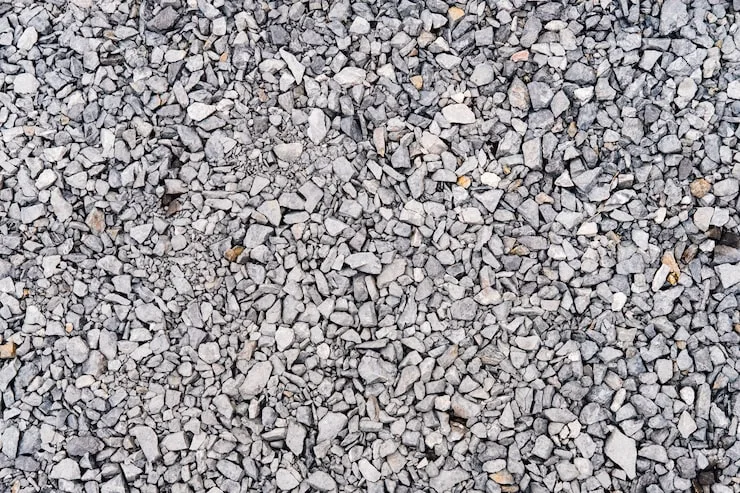
How Much Gravel, Sand or Soil Do You Actually Need?
A simple formula for calculating how many tonnes of crushed stone, sand, soil or gravel a job needs — plus an example of how that turns into a price.
Ordering material "by eye" usually ends one of two ways: the amount runs short and a second load has to be ordered, or too much gets delivered and the surplus just sits there. Both are avoidable if the quantity is worked out on paper before ordering.
This guide shows a simple formula for calculating how much crushed stone, sand, soil or gravel a job needs, and explains how that quantity turns into a final price.
- Formula: quantity (t) = area (m²) × layer thickness (m) × material density (t/m³).
- Example: a 50 m² area with a 10 cm layer of crushed stone needs roughly 8 tonnes.
- Always add 5-10% extra for compaction and uneven ground.
- Our dump truck holds up to 30 tonnes (24 m³) per load.
- Material pricing starts from €10-18 / ton, plus transport.
Calculate the quantity before ordering
The amount of material in tonnes depends on three things: the area in square metres, the layer thickness in metres, and the material's density. Once all three are known, you can work out the quantity yourself without waiting for a site visit.
Formula: area × layer thickness × density
Multiply the area (m²) by the layer thickness (m), then multiply the result by the material's density (t/m³). If the exact density isn't known, the approximate values below work as a guide.
Example: a 50 m² plot with a 10 cm layer
50 m² × 0.1 m = 5 m³. Using crushed stone at roughly 1.6 t/m³, that's 5 × 1.6 = 8 tonnes. It's worth adding 5-10% for uneven ground or compaction.
Approximate densities by material
Density varies by material and also depends on moisture and compaction, so these are approximate values commonly used as a starting point in construction. For a more precise figure, ask the material supplier for the exact density.
- Crushed stone: approximately 1.5-1.6 t/m³
- Construction sand: approximately 1.4-1.6 t/m³
- Gravel: approximately 1.6-1.8 t/m³
- Screened topsoil: approximately 1.2-1.4 t/m³
Which material suits which job
Quantity is only half the calculation — choosing the right material is the other half. The wrong material can mean redoing the work later.
Crushed stone
Suits road construction and concreting thanks to good load-bearing capacity and drainage. It also works well as a base layer, since different fractions compact into a stable, load-bearing surface.
Construction sand
Used for masonry work, plastering and filling sandboxes. Clean sand also suits drainage and bedding layers, where a fine, even material is needed.
Gravel
Works as fill and road gravel for driveways and sub-base construction. Gravel with good load-bearing capacity reduces ground settling and keeps a driveway usable even in wet weather.
Screened topsoil
Fertile soil suited to landscaping, lawns and flower beds. Screened topsoil is free of stones and has an even structure, making it easier to spread and helping grass establish faster.
Common mistakes when calculating quantity
Most quantity mistakes don't come from a wrong formula — they come from wrong inputs. These are the most common places where the calculation goes off.
- Confusing cubic metres with tonnes — these are different units connected only by the material's density
- Forgetting the compaction buffer, so the quantity falls short once installed
- Ignoring uneven ground, when depth or thickness varies across the site
- Underestimating layer thickness, especially when the base surface isn't level
How the price is built from the quantity
Once the quantity in tonnes is known, the price is straightforward to estimate. Material pricing starts from €10 / ton (gravel), €12 / ton (construction sand), €15 / ton (crushed stone) and €18 / ton (screened topsoil). Transport is added on top: €50 / h + VAT in Tallinn and €1.5 / km + VAT outside Tallinn.
Example: the 8 tonnes of crushed stone from the calculation above costs roughly 8 × €15 = €120 for the material, plus transport depending on the site's location and distance.
How many dump truck loads will this take?
Once the tonnage is known, it's worth checking the number of loads too. Our dump trucks (SCHMITZ and CMT) hold up to 24 m³, or roughly 30 tonnes per load, depending on the material's density.
Example: 8 tonnes of crushed stone
8 tonnes of crushed stone fits easily into one load, since a dump truck holds up to 30 tonnes. For a larger quantity, say 40-50 tonnes, it already takes 2 loads.
Summary
Before ordering material, calculate the quantity with area × layer thickness × density and add 5-10% as a buffer. That way the site gets exactly as much material as it actually needs, without a second load or leftover surplus.
Frequently asked questions
Should I order a bit more than the calculation shows?
It's usually worth adding 5-10% extra, since the ground is never perfectly even and some material is lost during compaction.
Is compacted and loose material the same quantity?
No. Material straight from the dump truck is looser than the layer once it's compacted, so the exact quantity only becomes clear after placement and compaction.
What if I don't know the exact area?
Give the transporter the site's approximate dimensions and the desired layer thickness — the quantity can be estimated from that too.
Can I order less than a full dump truck load?
Yes, both smaller and larger quantities can be ordered. For larger volumes we provide a tailored quote.
See our bulk material sales and delivery service and request a quote.
Read more articles
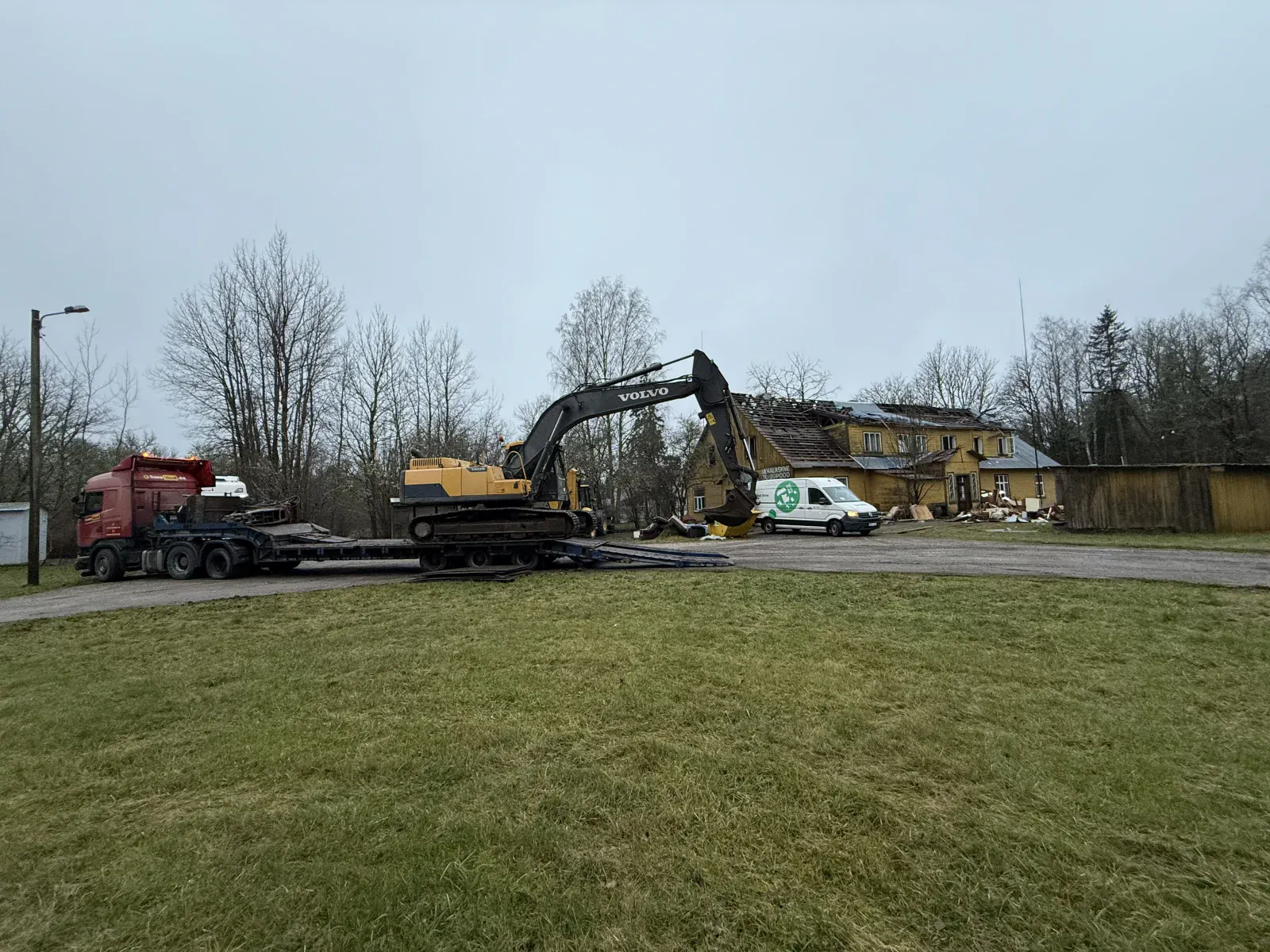
How to choose a heavy machinery transporter
What to check before ordering excavator, loader or other heavy machinery transport — weight, dimensions, trailer type and route.
Read more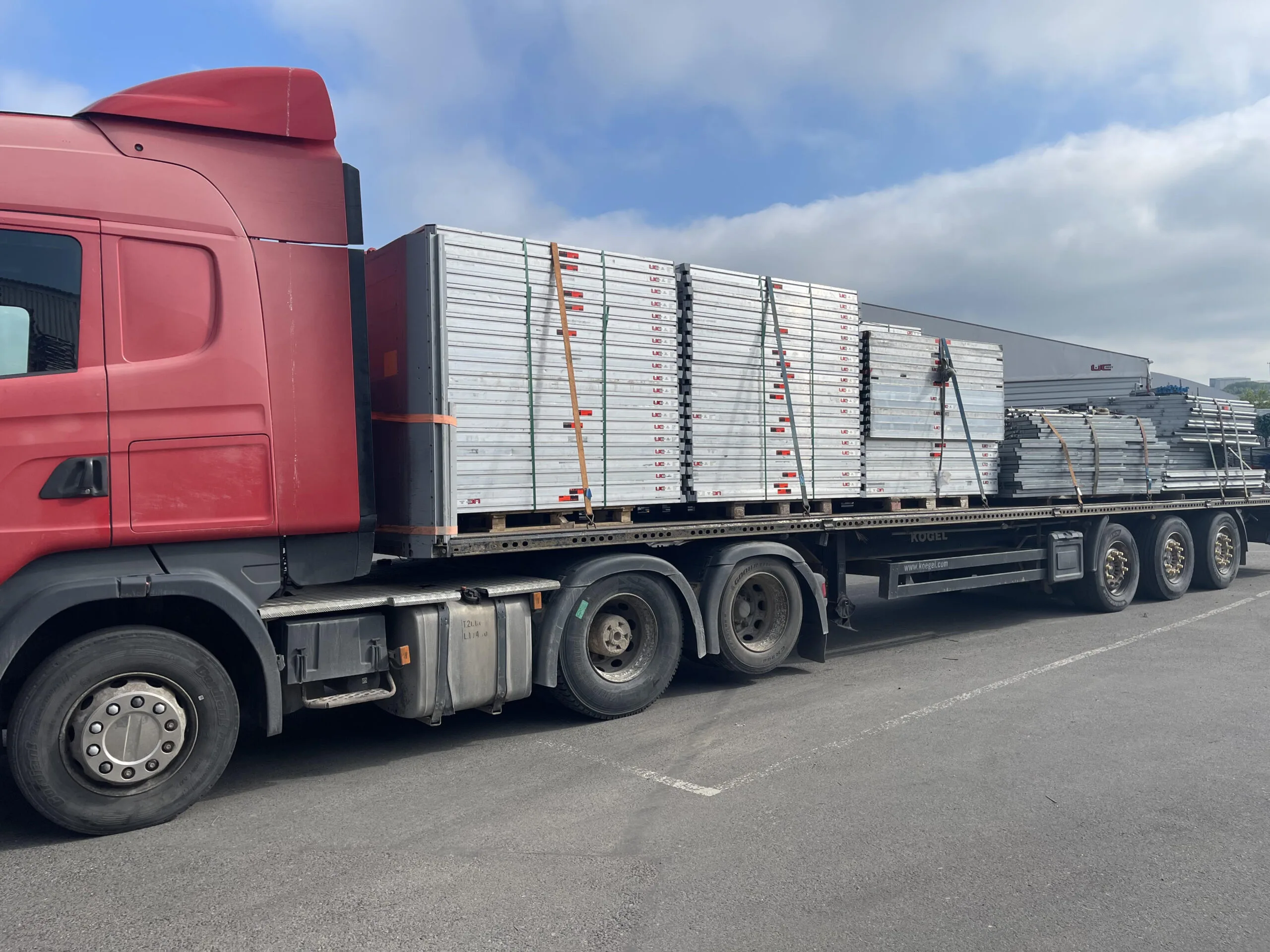
Dump truck or flatbed — what is the difference?
How to decide whether your job needs dump truck transport or flatbed transport — based on material, cargo shape and dimensions.
Read more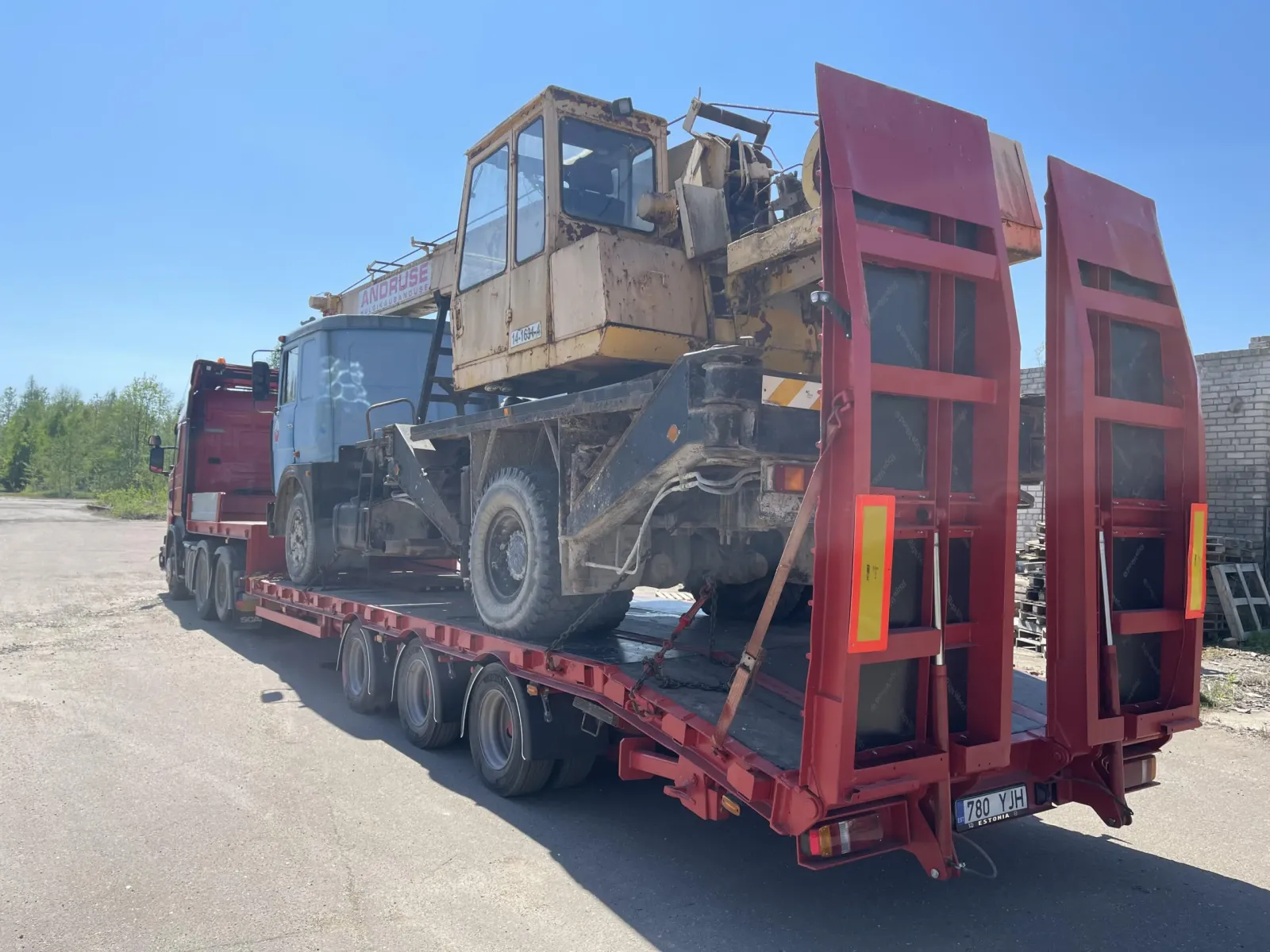
Soil removal checklist
What to check before ordering soil removal from a construction site, so dump truck transport can happen quickly and smoothly.
Read moreRequest a Machine Quote
Contact details
Our main service is machinery with driver. If you know the machine, mention it in the message. If not, describe the job and we will help choose.
We usually reply to quote requests on the same working day.
Send us a message
Leave your name, phone number, and a short description. We'll clarify the rest directly.